
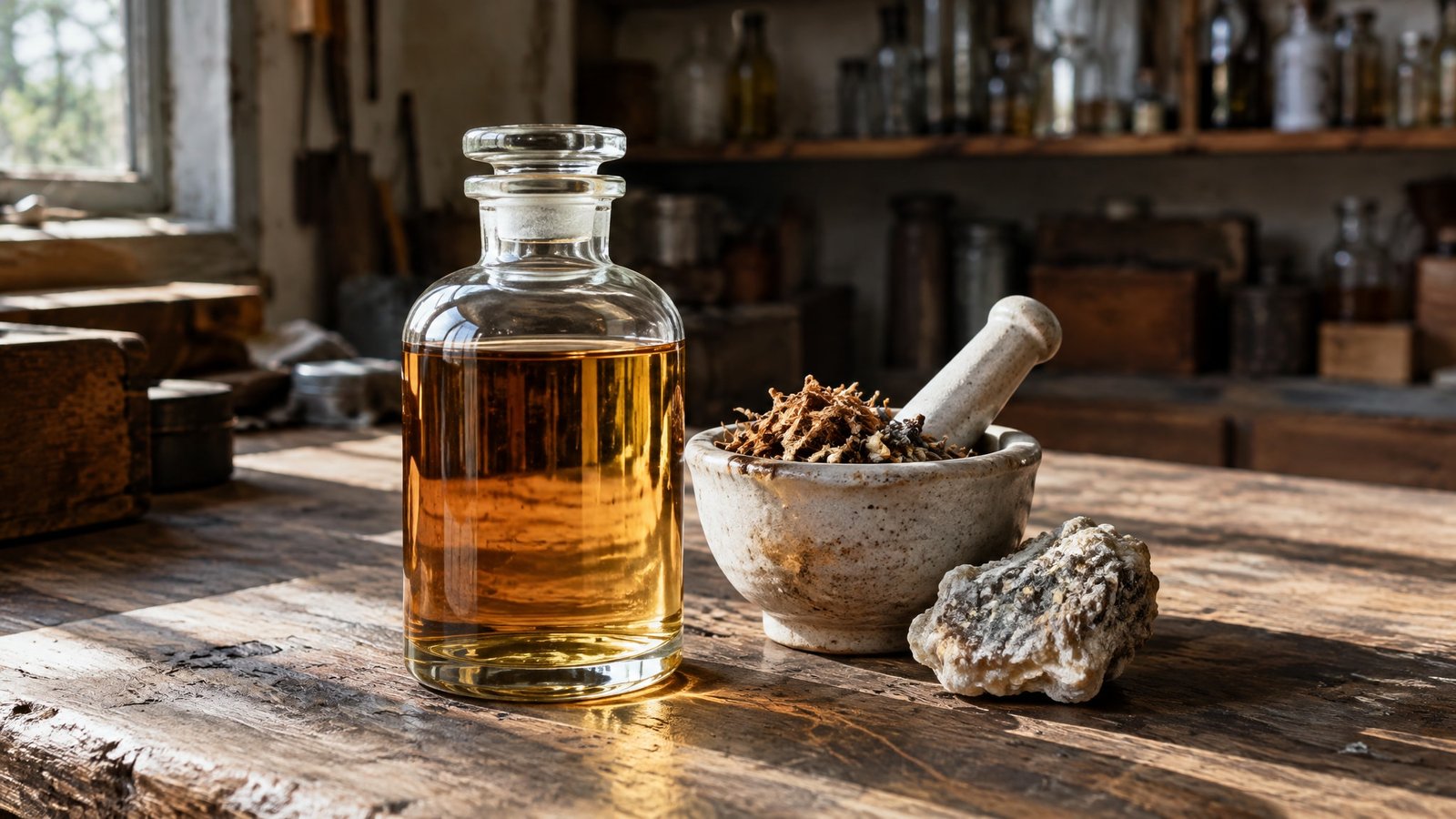
Walk into any department store fragrance aisle and you’ll meet the same synthetic amber accord, bottle after bottle: a flat sweetness with none of the living complexity of true marine resin. Finding an authentic ambergris scent means looking past mass-market retailers to independent perfumers who still work with pure plant extracts and traditional extraction. Old World Fragrance offers a curated line of seven extrait de parfum fragrances made purely from natural flower absolutes, tree oils, and plant extracts, including a dedicated Ambergris Fragrance for those seeking genuine depth.
This guide helps you tell real craftsmanship from marketing lore, so you can choose a fragrance that honors the ingredient’s rare heritage. You deserve a scent that evolves on your skin through natural chemistry, not one that sits static from first spray to last.
Finding Authentic Ambergris Scent in a Synthetic Market
Most commercial perfumes labeled “amber” contain no ambergris at all. They lean on synthetic molecules built to mimic its warmth without its cost or variability. True ambergris is historically valued at thousands of dollars per pound, simply because it’s a rare whale by-product, and that scarcity is exactly why affordable natural alternatives depend on expert sourcing and traditional extraction rather than industrial compounding. Search for ambergris perfume and you’re wading through a market of imitations that capture only a fraction of the original material’s character.
Authenticity here comes from transparency about ingredients and process, not evocative copy on the bottle. A genuine natural ambergris perfume lists specific botanical sources and extraction methods. It avoids vague terms like “fragrance oil” or “aroma compound,” the usual tells of synthetic blending. The distinction matters because synthetic accords can’t replicate how real resinous materials interact with body heat over time.
You can check purity by how the perfumer describes sourcing, and whether they commit to plant-based formulations without modern chemical fixatives. Founder Robert Comitz brings 45 years of fragrance-making experience to every bottle, favoring traditional craftsmanship over mass-market synthetic production. That dedication to method is what separates a fleeting novelty from a scent worth keeping.
The Craft of Natural Ambergris Perfume
Creating a fragrance from real ambergris takes patience. The material has already spent decades transforming before it ever reaches the perfumer’s bench, and the process rejects the efficiency of modern synthesis in favor of slow maceration and careful blending that preserves its inherent volatility and depth.
From Ocean Treasure to Extrait de Parfum
Ambergris is one of nature’s rarest and most mysterious gifts: formed within the sperm whale, drifting across the ocean’s surface, then transformed by sea and sun into a resinous essence perfumers have prized for generations. It arrives not as a pristine raw ingredient but as a weathered substance that needs gentle tincturing to release its full aromatic profile without losing its delicate marine nuances. The resulting natural extrait de parfum concentration wears close to the skin, unfolding gradually rather than projecting the way alcohol-heavy synthetics do.
Extraction at this level preserves rather than manipulates, letting the ambergris speak in its own voice alongside supporting botanicals. Each batch carries slight variations because nature doesn’t produce uniformity, and that inconsistency is part of what makes a product genuinely artisanal.
Why Purity Matters in Rare Ambergris Perfume
Purity in a rare ambergris perfume isn’t just an ethical stance, it’s a sensory one: adulterated or diluted materials lose the very complexity that makes them desirable. Synthetic fixatives can stretch out longevity artificially, but they flatten the scent’s evolution and block the intimate back-and-forth between fragrance and wearer that defines natural perfumery. Choose a formulation built entirely on flower absolutes and tree oils, and you’re accepting that it will behave differently than commercial alternatives, because it lacks the stabilizers that enforce consistency.
Stick with unadulterated ingredients and the fragrance you wear today may shift subtly over months, as the natural compounds keep marrying and maturing in the bottle. That living change is a feature of traditional craft, not a flaw, and it rewards anyone who values authenticity over predictability.
Old World Fragrance Ambergris Collection
Our collection centers on materials that honor their origins through minimal intervention. Each bottle is a direct line from earth or ocean to skin, crafted without the buffer of synthetic enhancers.

Ambergris Fragrance: The Ocean’s Hidden Treasure
The Ambergris Fragrance is the primary expression of this philosophy: a resinous, marine-rich base note that anchors lighter florals and woods with real warmth. It’s priced around USD 25.00 (subject to change), bringing accessible entry to a material usually reserved for luxury niche houses, though availability depends on sustainable sourcing cycles rather than industrial production schedules. This scent captures the salt-kissed, sun-warmed character of aged ambergris without the metallic or sterile edge of aquatic synthetics.
Wearing it reveals layers of dry wood, faint tobacco, and oceanic minerality that only emerge once the initial application settles into your own skin chemistry. It’s a fragrance for contemplation as much as adornment, inviting a second look throughout the day as it transforms.
Complementary Natural Scents: Musk, Sandalwood, and Patchouli
Layering is where ambergris really opens up, and certain companion scents share its plant-based integrity while adding contrast. Our natural sandalwood perfume brings creamy warmth that softens ambergris’s saline edges, for a balanced profile suited to day or evening. The sandalwood oil itself comes from ancient trees in India, Hawaii, and New Caledonia, with a grounding aroma treasured for centuries.
Musk Fragrance, sourced from the landscapes of Tibet, adds rich, earthy depth that enhances ambergris’s animalic undertones without overwhelming them. Patchouli fragrance brings bold, sweet-earth contrast, with vanilla and sandalwood accents, for anyone who wants their ambergris to lean toward opulent darkness rather than marine lightness. Pair them by instinct rather than formula, and you’ll find your own signature combination.
Natural vs. Synthetic Ambergris Fragrance for Sale
Knowing the difference between natural and synthetic options saves you disappointment, especially if your expectations come from years of wearing standardized commercial perfumes. Natural extrait de parfum follows biological and environmental cues, not manufacturing specifications, and that distinction is worth understanding before you buy.
Recognizing True Plant-Based Depth
Synthetic amber fragrances smell identical from first spray to final fade, engineered for consistency across millions of units. Natural ambergris takes a different path: top notes of brine give way to heart notes of dried fruit and resin, before settling into a base that merges inseparably with your own skin’s oils. Two people wearing the same bottle end up with distinctly different scents, something no lab-created molecule can do.
True plant-based depth shows up in texture too. Natural extracts feel richer and more viscous on the skin, without the sharp alcohol bite that opens most synthetic perfumes. You notice this the moment you apply it, as the fragrance seems to absorb rather than evaporate.
The Longevity of Natural Extrait de Parfum
Natural extrait de parfum behaves differently than synthetic eau de toilette. It projects softly but lingers intimately for hours, through molecular bonding rather than volatile diffusion. Synthetic versions might announce themselves loudly across a room before vanishing abruptly, while natural ambergris holds a quiet presence that rewards proximity and movement. That longevity comes from a high concentration of fixed botanical oils, which release their aroma slowly as body heat activates them.
Expect reapplication to refresh the scent rather than restart it, since residual base notes keep developing even as top notes fade. This is the living nature of the ingredients at work, and it’s what separates genuine craft from performance-engineered alternatives.
Selecting Your Signature Ambergris Scent
Choose a unisex fragrance based on personal resonance, not gendered marketing, and you’re free to follow your senses where they actually lead. Ambergris sits outside masculine and feminine categories because its appeal is texture and memory, not cultural coding. That makes it ideal if you’re drawn to scents that keep evolving.
Start with samples or smaller sizes and watch how the fragrance unfolds on your skin over several days. Note how humidity, temperature, and mood shift its expression. Natural ambergris interacts uniquely with individual biochemistry, so what smells marine and bright on one person may read as woody and sweet on another. Trust your own experience over any review, since no account can predict your personal alchemy with the material.
Let the discovery take its time rather than rushing to a final choice. Your signature should come from familiarity, not obligation to a brand’s narrative.
Caring for Pure Flower and Plant Extract Perfumes
Natural absolutes and tree oils need mindful storage, since they lack the synthetic preservatives that shield commercial fragrances from degradation. Keep your bottles away from direct sunlight and heat, in cool, dark spaces where temperature stays steady. UV light speeds up oxidation in plant-based compounds, dulling the nuances that define a rare ambergris perfume.
Keep caps tight, and don’t transfer fragrance to unsealed containers; oxygen exposure compromises delicate resinous notes just as fast. Treat your perfume as a living thing rather than a shelf-stable product, and it rewards your care with continued depth.
Experience the Elegance of Traditional Perfumery
Forty-five years of fragrance-making experience inform every decision at Old World Fragrance, from sourcing to extraction. This heritage isn’t nostalgia, it’s an ongoing commitment to unleashing luxury through materials that ask for respect and patience. Join our community for access to rare releases and updates on seasonal availability of ingredients like ambergris, which depend on nature’s own cycles.
Explore the full collection of seven pure extrait de parfum fragrances and see how traditional craft becomes contemporary elegance. Sign up today for guidance on layering, care, and new arrivals, straight from perfumers who believe authenticity is worth the wait.
Frequently Asked Questions
Why is authentic ambergris perfume so expensive compared to synthetic versions?
True ambergris is a rare whale by-product that forms over decades in the ocean, making it scarce and labor-intensive to source ethically. Synthetic alternatives cost pennies to produce because they replicate only isolated scent molecules without the complex aging process. Natural ambergris perfume reflects this scarcity in price, though artisanal houses like Old World Fragrance make it accessible through careful sourcing and direct-to-consumer pricing around USD 25.00.
How can I tell if an ambergris fragrance uses real natural ingredients?
Check whether the perfumer discloses specific botanical sources and extraction methods rather than listing generic ‘fragrance’ or ‘aroma compounds.’ Authentic natural ambergris perfume will describe tincturing processes and avoid synthetic fixatives or stabilizers. Transparency about batch variation and ingredient origin signals genuine craft, whereas uniformity across all products suggests industrial formulation.
What does real ambergris smell like versus commercial amber fragrances?
Authentic ambergris carries a complex, evolving scent profile with marine salinity, dry wood, faint tobacco, and resinous warmth that shifts throughout wear. Commercial amber fragrances typically use synthetic ambroxan or similar molecules that smell uniformly sweet, clean, and linear from start to finish. Natural ambergris integrates with your skin chemistry uniquely, while synthetic versions maintain the same character regardless of wearer.
Which natural scents pair best with ambergris for layering?
Sandalwood adds creamy warmth that softens ambergris’s saline edges, creating a balanced unisex blend suitable for daily wear. Tibetan musk enhances its animalic depth without overpowering, while patchouli introduces bold, sweet-earth contrast for evening occasions. These plant-based companions share ambergris’s natural integrity and evolve together on skin rather than competing.

Leave a Reply