
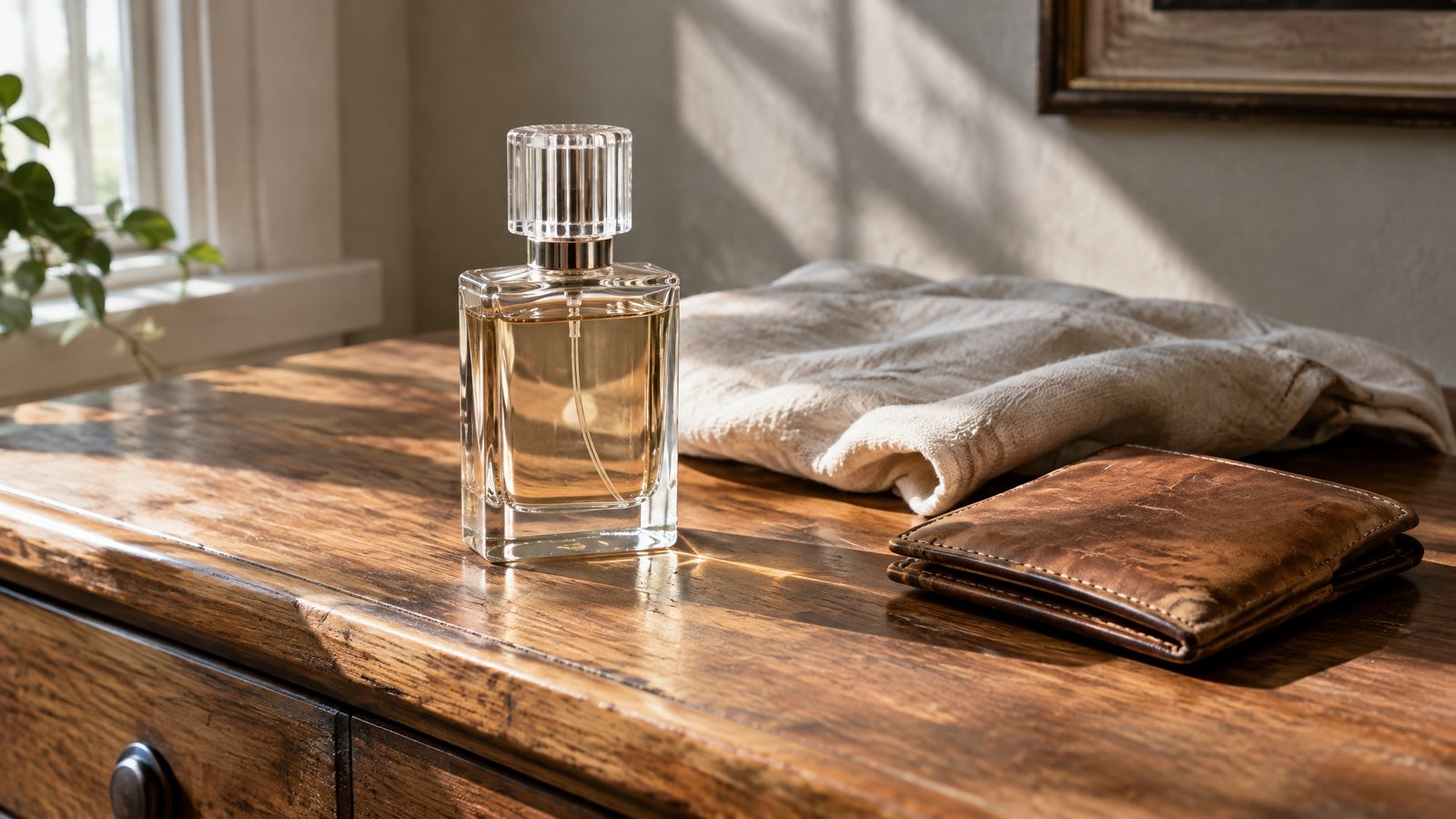
Think of the scent that makes you slow down: a bar of soap warmed by a sunny windowsill, a candle lit at dusk, the coat of someone you love. Now imagine wearing something that feels that personal every day. That is the quiet promise behind learning how to choose a signature scent, and it begins well before you uncap a bottle.
What a Signature Scent Really Is
A signature scent is the fragrance you reach for most, the one that settles into your skin until it smells like you on a good day. It is not the loudest bottle on the shelf or the one a stranger raved about.
You choose it from how you live and dress, long before you spray anything.
The first sniff on a paper card tells you very little, because a card has no warmth, no pulse and no history with you. A signature is judged over weeks of wear, as you notice whether you still look forward to it on the fifth Tuesday in a row, and whether it still feels like yours when the novelty has gone.
Choosing a Signature Scent Starts With Your Personality
Personality sounds like a horoscope, but here it is a practical filter. Your wardrobe, your routine and your climate all narrow the field before a single note enters the conversation.
Finding Your Perfume Personality
Finding your perfume personality is an audit, not a quiz. Look at the evidence you already have, and let each answer point toward a note family (the families are explained in the next section).
- How you dress. Soft knits, linen and worn-in leather tend to suit woody and earthy scents. Crisp, minimal clothes often sit well with something airy and floral.
- How your days run. A quiet desk job and a packed commute ask different things of a fragrance. If you want calm to follow you around, lean woody or floral. If you want presence, look at musky and resinous.
- Your climate. Heat amplifies everything, so a scent that feels gentle in January can feel dense in July. Warm places favour lighter florals, while cold ones welcome richer, deeper bases.
- What you already love. Think of the candles you relight, the soaps you finish, the bottle on a friend’s shelf you keep asking about. If it was sweet and floral, start with floral. If it was smoky or mossy, start with earthy or woody.
Notice the pattern across your answers. Two or three that agree give you a starting family, and that is enough to begin. Your answers will not name the bottle for you, but they will tell you which shelf to stand at.
Perfume Note Families Explained
Perfume note families explained plainly are just groups of smells that share a mood. Once you can name the mood you respond to, you can shop with confidence instead of guessing.
How Top, Heart and Base Notes Unfold
A fragrance does not smell the same from the first minute to the last. It moves in three stages.
Top notes arrive first. They are bright, quick and the part that makes an impression at the counter, but they fade within minutes.
Heart notes come next, as the opening softens. This is the character of the scent, the part that tells you what it is really about.
Base notes linger longest. Woods, resins and musks sit here, and they are what remains on your sleeve at the end of the day.
Because the scent keeps shifting, the first spray is never the final verdict. Wait until the fragrance has settled before you decide, since a perfume that dazzles for ten minutes may not be the one you want at hour six.
The Natural Note Families to Recognize
Five families cover the Old World lineup, and each sets a distinct mood.
- Floral (jasmine, lotus): sensual, fresh and serene, depending on the flower.
- Woody (sandalwood): warm, calm and steadying.
- Earthy (patchouli): deep, rooted and a little sweet.
- Resinous (ambergris): rich, rare and faintly mysterious.
- Musky (musk): warm, close and skin-like.
Pay attention to which one you lean toward. Noticing the family you respond to, whether it makes you exhale or sit up straighter, is the fastest route to a shortlist. The families overlap in real bottles, of course, so treat them as signposts rather than strict boxes.
Extrait Strength and Natural Absolutes Change How a Scent Wears
Two things shape how a fragrance feels on you before you ever consider a single note: how concentrated it is and what it is made from. Both change character more than they change volume.
What Extrait de Parfum Changes on Skin
Extrait de parfum is the most concentrated perfume strength. It tends to feel richer and rounder, and it often wears longer than lighter concentrations, so the heart and base notes have more room to speak.
Your own skin still has the last word. Skin chemistry and body heat shape the result, which is why the same extrait can read creamy on one wrist and sharper on another. If you want the fuller explainer, natural extrait de parfum is covered in its own guide.
What Natural Absolutes Change Once a Scent Settles
Old World makes its extrait lineup purely from natural flower absolutes, tree oils and plant extracts, with no modern synthetic compounds. The founder, Robert Comitz, brings 45 years of fragrance-making experience to that traditional approach.
If you are wary of synthetics, the natural versus synthetic perfume guide lays out the difference in more detail.
Here is what matters for choosing. A natural build gives a scent a different character, more layered and more like the raw material it came from, and that character is what you are choosing between. It is not a promise about how many hours a scent will last, and no honest guide can give you that number in advance, because your skin decides it.
Walking the Old World Lineup as a Decision Framework
Ask yourself one question as you read this section: which feeling do you want close to your skin? Each of the six scents leans toward a distinct mood, so the field narrows quickly once you name yours.
Grounded, Earthy and Warm Scents
Choose from this trio if you want to feel settled, steady and rooted.
Sandalwood is the calm one. The oil comes from ancient trees in India, Hawaii and New Caledonia, and it carries a warm, calming aroma that is rich and grounding. It suits the person who wants a quiet, unhurried elegance.
Patchouli fragrance is earthy yet sweet. It pairs the deep, earthy patchouli with the creamy warmth of vanilla and the grounding touch of sandalwood, so it feels bold and comforting at once. If you love a dark, sweet candle, start here.
Musk Fragrance is rich, warm and earthy. Its musk is sourced from Tibet, and it is the pick for anyone who wants depth and a lasting presence that stays close. For more on this one, the natural musk perfume guide goes further.
Sensual, Serene and Mysterious Scents
This trio is for the wearer who wants something lighter on the senses, or something with a little more intrigue.
Jasmine Fragrance is sensual yet fresh. Two of the most revered jasmine oils are handpicked and blended, which gives it a timeless feel with a modern lift. It is the natural choice if florals are your first love.
Blue Lotus fragrance is calming and mysterious. It is built on white, pink and blue lotus absolute oils, with white for purity, pink for grace and blue for mystery. If you want the lore before you wear it, read the story behind blue lotus.
Ambergris Fragrance is resinous and rare. Ambergris forms within the sperm whale, drifts across the ocean, and is transformed by sea and sun over time. Pick it when you want something unusual that nobody else in the room is wearing.
This framework narrows six scents to one or two. It will not choose for you, and it is not for anyone who wants a verdict from a card or a quiz alone.
Testing Your Shortlist on Skin Before You Commit
Once you have two or three names, put them on your skin. Paper cannot show you how a scent meets your warmth, and warmth is the whole story with natural oils.
Signature Fragrance Tips for a Fair Skin Test
These signature fragrance tips keep the test honest:
- Try one scent per wrist or arm, never several at once.
- Wear it for the whole day, and check in at the first hour, mid-afternoon and evening.
- Note how it changes, and whether you still like it once the top notes are gone.
- Give your nose a rest between tests, ideally by waiting until another day, so the first impression does not blur into the next.
Because the base notes show up last, a scent you like at hour one and love at hour eight is the one worth keeping. You may find that your favourite on day one is not your favourite on day three, and that is exactly what the test is for.
Choosing Unisex Perfume Beyond Gender Labels
Choosing unisex perfume comes down to notes, not labels. Sandalwood does not know who is wearing it, and neither does jasmine. Because the lineup is unisex in character, you can judge every scent on the same terms: how it feels, how it settles, and whether it still feels like you at the end of the day.
Start with the one that matches the mood you named earlier. Read the Sandalwood page if you want calm and grounding, then browse the perfumes collection to compare your shortlist side by side. For a deeper read on one of the most debated notes, the unisex patchouli perfume guide shows how a single scent can belong to everyone.
Frequently asked questions
How do I know what my signature scent should be?
Start with how you dress, how your days run and the scented things you already love, then match those answers to a note family. Pick two or three scents from that family and wear each for a full day. The one you still enjoy at the end of the day, and keep reaching for, is your signature.
How long should I wear a scent before deciding?
Give each scent a full day on skin, checking it in the first hour, mid-afternoon and evening. The top notes fade quickly, so the later stages tell you the truth. If you can, repeat the test over a few days before you commit.
Does a natural extrait de parfum last longer?
Extrait de parfum is the most concentrated strength, so it tends to feel richer and wear longer than lighter concentrations. Natural absolutes mainly change the character of the scent, making it more layered. How long it lasts on you depends on your skin chemistry and body heat.
Can I choose a scent that isn’t labelled for my gender?
Yes. Notes decide whether a scent suits you, not a label on the box. Judge each one by how it feels on your skin once it has settled, and use the note families as your guide.

Leave a Reply