
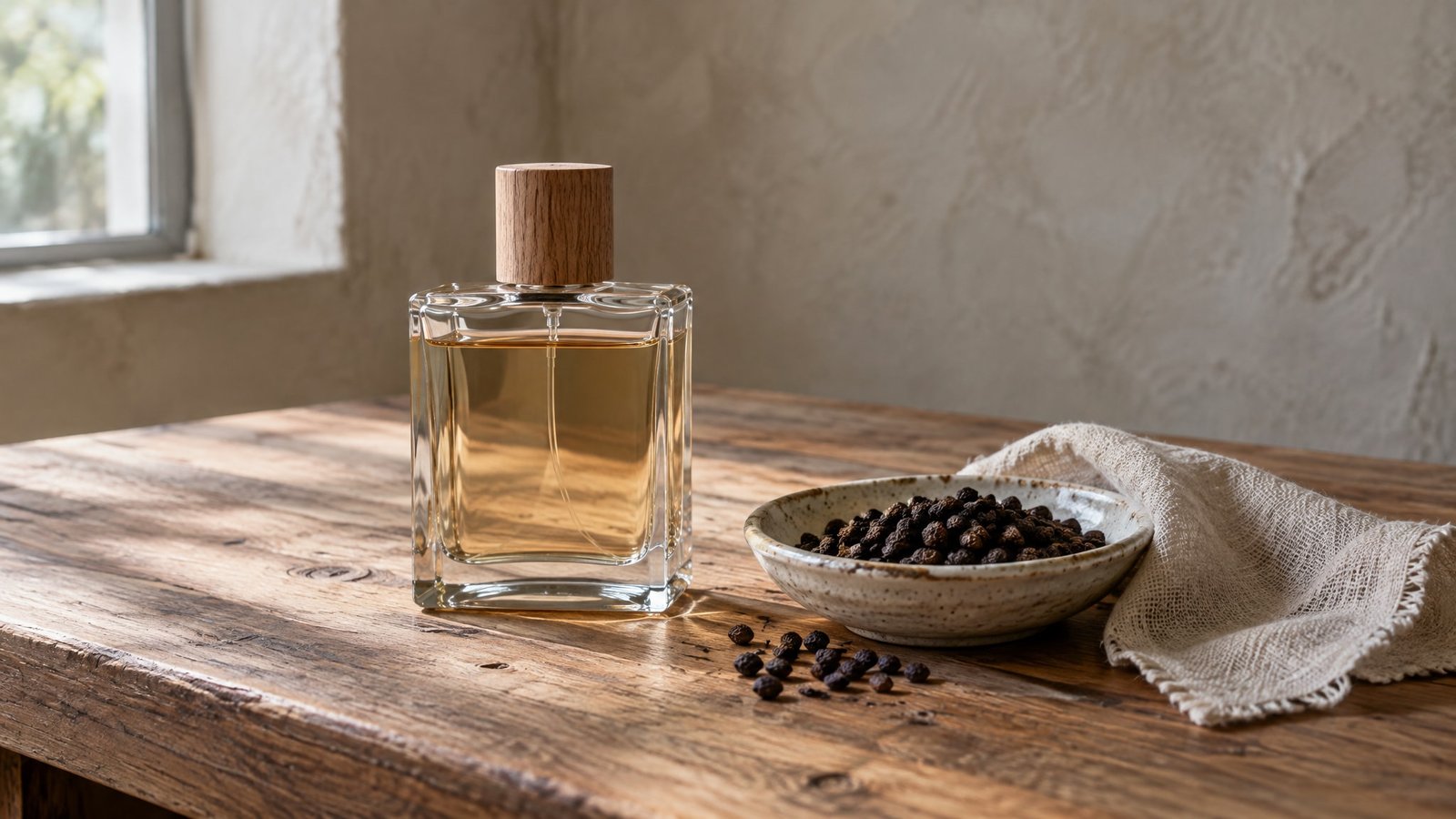
Open a bottle labelled “musk” and you could be smelling one of four things: an animal material, a marine one, a plant one, or a molecule built in a lab. The label alone won’t tell you which.
That gap is why natural musk perfume with no synthetics is harder to find than the listings suggest. Plenty of “natural musk” scents lean on lab-made compounds for that soft, skin-close glow. This guide draws the line clearly, so you can tell what you’re wearing and indulge in something crafted the old way.
Natural Musk Perfume vs Synthetic Musk: Where the Line Falls
Musk is a feeling before it is a material: warm, close, a little hushed. Two very different routes lead to it, and the difference shows up in sourcing long before it shows up on your skin.
What Synthetic Musks Are and Why Perfumers Use Them
Synthetic musks are lab-made aroma molecules. They come in three broad families: polycyclic, nitro, and macrocyclic. Each one smells soft, clean, and skin-like, which is exactly the texture people expect from “musk.”
Perfumers like them for three plain reasons. They smell the same from batch to batch, they cost little to make, and they never depend on an animal or a harvest. Many modern perfumes use them for that reason.
Some older families have faced restrictions or environmental scrutiny, and the synthetic musk entry on Wikipedia sketches how the families differ. Synthetic doesn’t mean unpleasant. It means the softness was engineered rather than gathered, and that is the distinction this article cares about.
Why Natural Animal Musk Has Long Been Scarce
Traditional musk came from the musk deer, a protected animal whose trade is tightly restricted. Supply was always tiny and is now closely controlled.
That scarcity is a large part of why synthetics became everyday musk. When the real thing is rare and regulated, a reliable molecule fills the gap, and over time the molecule became what most people think musk smells like.
The Musk Fragrance copy says its musk comes from the highlands of Tibet and calls it all-natural. That is the brand’s own description. As with any musk, you’re right to ask for the documentation behind a sourcing claim, and we’ll come back to exactly how.
Natural Ingredients Behind Musk: Ambergris and Plant-Derived Notes
If you want musk’s warmth without a lab, two other families of materials get you close: one from the sea, one from the garden. Each has its own scent and its own sourcing story.
Ambergris: A Marine Material Shaped by Sea and Sun
Ambergris forms inside the sperm whale. It later drifts across the ocean’s surface, and over time the sea and sun age it into a fragrant, resinous material. Ambergris Fragrance tells that story in its own copy, and perfumers have prized the material for generations.
Its scent is salty, soft, and faintly sweet, with a skin-like depth that makes it a natural companion to musk. It isn’t plant-derived, so nobody should describe a line containing it as purely plant-based.
Sperm whales are a protected species, so how a brand obtained its ambergris matters. Ask for that answer in plain terms, and if you’re shopping specifically for this material, our guide on where to find real ambergris perfume covers what to look for.
Plant-Derived Musk Notes: Ambrette Seed and Creamy Woods
Ambrette seed, from the musk mallow plant, is a genuinely musky plant material. It smells warm and slightly nutty, with the same soft, skin-like hum that made animal musk famous.
Watch the name, though. Musk ambrette is a synthetic nitro musk with an almost identical name, so a label that says “ambrette” alone doesn’t settle anything. The botanical seed and the lab molecule are not the same thing, and only the ingredient list and a named source will tell you which one you’re getting.
Creamy woods sit nearby rather than inside the musk family. Sandalwood and patchouli are musk-adjacent: they share the warmth and the closeness to skin, but they aren’t musk and don’t pretend to be. Layered or worn alongside musk, they round it out.
Animalic Natural Perfume: What Musk Smells Like on Skin
Is musk a good smell or a bad one? It depends entirely on how much of it you’re smelling. At full strength, animalic musk can read as intense, even funky, the way a warm wool coat smells after a long walk.
Diluted, the same material turns soft, warm, and skin-like. That is the musk people fall for, and it’s why a good animalic natural perfume is built on restraint.
Why Animalic Notes Read as Warm and Close to Skin
Animalic notes don’t sit on top of your skin like a spray of citrus. They melt into it. Your body heat and your own chemistry shape how the note settles, so the same bottle can feel a touch sweeter on one wrist and earthier on another.
They also move. In the first minutes you may notice depth and a little shadow, and over the following hours the edges soften until the scent feels like part of you. The Musk Fragrance copy calls its aroma “rich, warm, and earthy,” and that is a fair map of the journey: earth first, warmth lingering after.
This isn’t a scent for anyone who wants a crisp, loud first impression. Musk is quiet by design, and if you prefer fragrance that announces itself from across the room, it will feel too subtle.
Musk Extrait de Parfum: Why Concentration Changes the Wear
Extrait de parfum is the most concentrated form of perfume. More of the fragrance material and less of everything else means the scent behaves differently on your skin, and a base note like musk gains the most from that.
Musk is a slow material. It was never meant to burst and vanish, so a concentration that lets it unfold gently suits its nature. You can read more about how this format works in our explainer on natural extrait de parfum.
How Extrait Concentration Shapes Musk’s Dry-Down
The dry-down is the stage that matters most with musk, because it’s where the fragrance settles for hours after the opening has gone. In an extrait, that stage arrives slowly and stays long, so the warm, skin-like heart of the scent has time to develop rather than fading before you’ve noticed it.
A lighter concentration can leave musk feeling like a passing whisper. An extrait lets the same note become a lasting presence, closer and more personal.
One small drop goes a long way. Because the formula is concentrated, a light touch on the pulse points is usually enough, and the scent stays near you rather than filling the room.
Checking a Synthetic-Free Musk Perfume Before You Buy
A synthetic-free musk perfume is only as trustworthy as the answers behind it. The bottle gives you a name and a mood, but you need to look past both.
What “Natural” and “100% Natural” Do and Don’t Promise
In most markets, “natural” and “100% natural” have no single legal meaning for perfume. Two brands can use the same words for very different formulas, and natural formulas can still contain solvents and carriers, so the claim is only as strong as the documentation that backs it.
Claims such as “non-toxic” or “safe” go further than a “natural” label can support. Natural is a statement about origin, not a guarantee about how anyone’s skin will react.
So read the ingredient list first. A named source for the musk matters more than the word “natural” on the front.
Sourcing Questions to Ask Any Brand About Its Musk
Put these to any house you’re considering, including ours:
- Is the musk animal, marine, plant-derived, or synthetic?
- Where is the raw material sourced?
- Can the brand document that sourcing?
A brand with nothing to hide will answer all three plainly. If the replies are vague or arrive as marketing language, treat that as an answer too.
Old World Fragrance describes its line as built from natural flower absolutes, tree oils, and plant extracts rather than modern synthetic compounds. Founder Robert Comitz has spent 45 years making fragrance by traditional methods. We’d rather you ask these questions of us directly than take any of it on faith.
How the Six Naturals in Our Line Compare
Musk is the centre of this guide, but five other scents each catch a different side of its warmth. Here is how all six sit together.
Musk Fragrance. The reference point. Its copy promises a rich, warm, and earthy aroma with depth and lasting presence, and it’s the one to try if intimate and skin-close is what you’re after.
Ambergris Fragrance. Musk’s sea-borne cousin: resinous, soft, and a little mysterious, shaped by the ocean and the sun. It adds a gentle salt-and-amber glow where musk adds earth.
Sandalwood. Warm and calming, drawn from ancient trees in India, Hawaii, and New Caledonia. It gives you musk’s closeness in a creamy, grounding wood, and our guide to natural sandalwood perfume goes deeper.
Patchouli fragrance. Earthy and bold, balanced with the creamy warmth of vanilla and the grounding touch of sandalwood. It leans toward the earthy side of musk without the animalic edge.
Jasmine Fragrance. We travel to handpick two of the most revered jasmine oils and blend them into something sensual yet fresh. It shows musk’s softness in a floral light, and the story of pure jasmine absolute explains why.
Blue Lotus fragrance. Built from white, pink, and blue lotus absolutes, it’s calming, uplifting, and quietly mysterious. It’s the airiest of the six, and the furthest from musk’s depth.
Patchouli and Blue Lotus don’t have dedicated articles yet, but you can browse the full perfume collection to see them beside the rest.
Choosing Your Signature Natural Musk
Start with the feeling you want, not the name on the bottle. If you want something intimate and warm, begin with musk itself. If you lean earthy, patchouli or sandalwood will meet you there, and if you want something soft and floral, jasmine or blue lotus is the gentler route.
Then test on skin across a full day. The first minutes tell you very little about a musk, because the character lives in the dry-down hours later. Wear it to work, to dinner, and to bed before deciding.
A natural scent won’t perform like an engineered one, and it isn’t meant to. It will shift, soften, and change with you, and that’s the point of wearing it.
When you’re ready, unleash your senses with the Musk Fragrance, then join Old World Fragrance updates to hear first about what comes next from the house.
Frequently asked questions
What is musk fragrance in perfume?
Musk is a warm, soft, skin-like note that sits at the base of a perfume. It can come from an animal source, a marine material like ambergris, a plant such as ambrette seed, or a lab-made molecule. The word “musk” on a label doesn’t say which, so check the ingredient list and ask about the source.

Which perfume is 100% natural?
No single legal definition of “100% natural” exists for perfume in most markets, so the phrase alone proves little. Look for a named source for each key material, ask whether solvents or carriers are used, and ask the brand to document its sourcing. Old World Fragrance describes its line as built from flower absolutes, tree oils, and plant extracts, and you’re welcome to put those questions to us.
What are synthetic fragrances?
Synthetic fragrances are aroma compounds made in a lab rather than extracted from flowers, trees, or other natural materials. They’re consistent from batch to batch and inexpensive to produce. Synthetic musks fall into polycyclic, nitro, and macrocyclic families.
Does natural musk last longer in an extrait de parfum?
Generally, yes. Extrait is the most concentrated form of perfume, and its slower dry-down gives a base note like musk more time to settle and linger on skin. How long it lasts still varies with your skin chemistry.

Leave a Reply